Special Purpose Machines: When Do They Beat Standard Machines?
A special purpose machine is built for one part or one operation. We explain when it makes more sense than a standard machine tool, how the design process works and what the legal obligations are.
What is a special purpose machine?
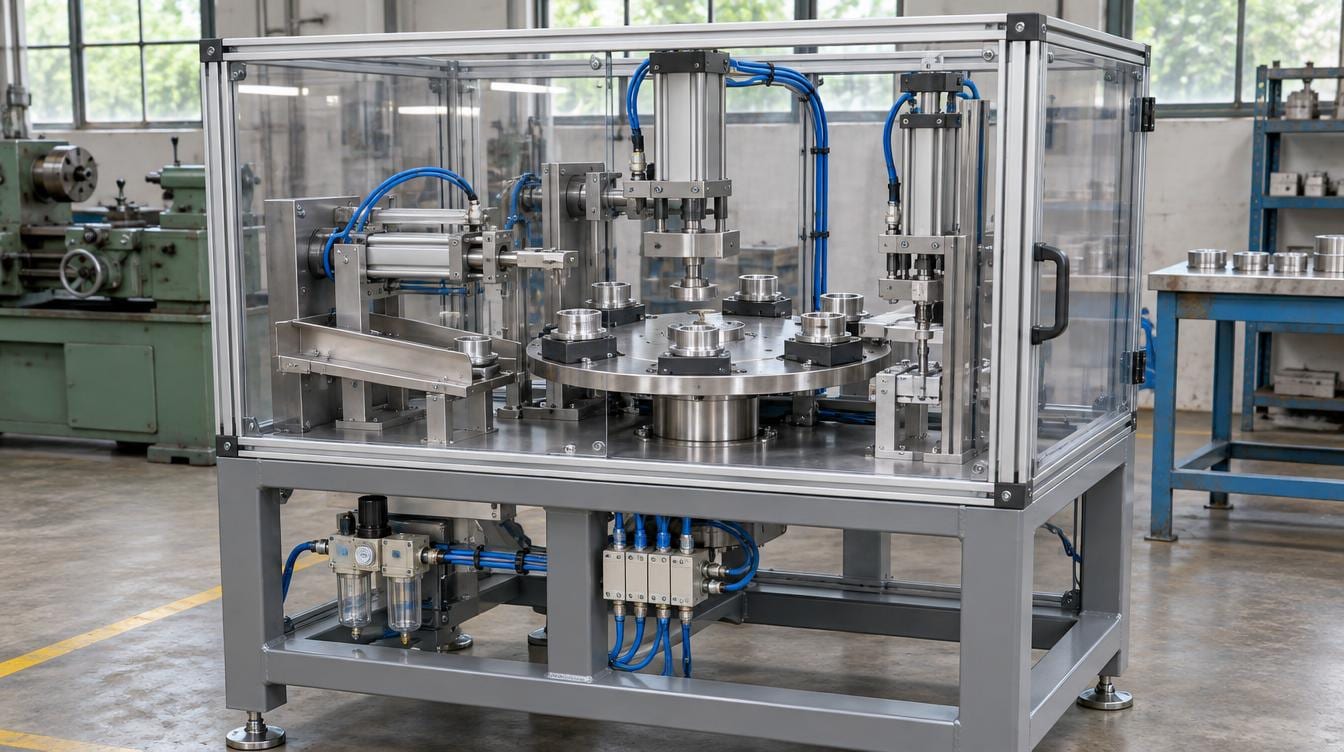
A special purpose machine (SPM) is not an off-the-shelf, general-purpose machine tool; it is designed from scratch for a specific job. Examples include a multi-spindle unit that drills several holes in a part at once, a pneumatic or hydraulic pressing station that fits a bushing into a housing, an automatic fixture that holds a part in exactly the same position for welding every time, or a test rig that checks parts at the end of a production line.
On a general-purpose machine, such as a CNC milling machine or lathe, you change tools and workholding to machine very different parts. On a special purpose machine, the tooling, clamping and motion sequence are built around the part and are often an integral part of the machine. You give up flexibility and gain speed, repeatability and less operator intervention in return.
How does it differ from a standard machine?
The core difference is the trade-off between flexibility and productivity. The table below summarises general tendencies; every project still needs its own assessment.
| Criterion | General-purpose (standard) machine | Special purpose machine |
|---|---|---|
| Part variety | Handles a wide range of parts | One part or a close family of parts |
| Setup and changeover | Setup needed for every new job | Setup is mostly done once |
| Cycle time | Operations are often done one after another | Operations can be combined and run simultaneously |
| Operator skill | Setup and programming knowledge needed | Mainly loading, unloading and checking |
| Initial investment | Ready-made product, short lead time | Requires design and manufacturing |
| When the product changes | Can continue on other jobs | Needs modification or may become idle |
If you want to compare general-purpose machine tools, see our article CNC Milling vs CNC Turning.
When should you choose a special purpose machine?
Automation trade publications and machine builders point to similar criteria. Fixed (dedicated) automation fits best when annual volume is high, model mix is low and parts are small and few in number. As volume falls and variety grows, more flexible, cell-based solutions come to the fore.
In practice, if the answer to the following questions is "yes", a special purpose machine deserves serious consideration:
- Will the part or product stay largely the same for several years?
- Is this operation a bottleneck on standard machines, setting the pace of the line?
- Do quality problems come from operator-dependent variation (positioning, clamping force, sequence)?
- Is the operation heavy, repetitive or ergonomically demanding?
- Can several operations be combined in a single clamping?
If, on the other hand, product life is short, order quantities are irregular or the design changes frequently, the fixed nature of a special machine becomes a drawback. In that case, a standard machine fitted with a good fixture is often the smarter option.
How should you think about payback?
Payback is judged by the difference the machine makes, not by its price. What does a part cost with today's method, what will it cost with a special machine, and how many parts a year will that difference be multiplied by? The bigger the difference and the higher the volume, the sooner the investment pays for itself.
The main items to include are: shorter cycle time, operator and setup time, scrap and rework rate, quality inspection workload, reduced risk of accidents and occupational illness, and maintenance and spare-parts costs. On the other side, note what happens to the machine at the end of the product's life: can it be converted for another part, or will it be scrapped?
How does the design process work?
A special purpose machine project starts with a detailed study of the part and the operation. Which surface is the datum, where is the tolerance critical, how does the part enter and leave the machine, where will the operator stand? Designing before these questions are answered leads to costly changes during manufacturing.
Typical steps are:
- Requirements definition: Part, volume, target cycle time, quality criteria and working environment are put in writing.
- Concept design: Several solution options (pneumatic, hydraulic, electromechanical; rotary index table or linear flow) are compared.
- Risk assessment: Hazards are identified at the very start; guards, safety circuits and emergency stops are not bolted on later but designed in.
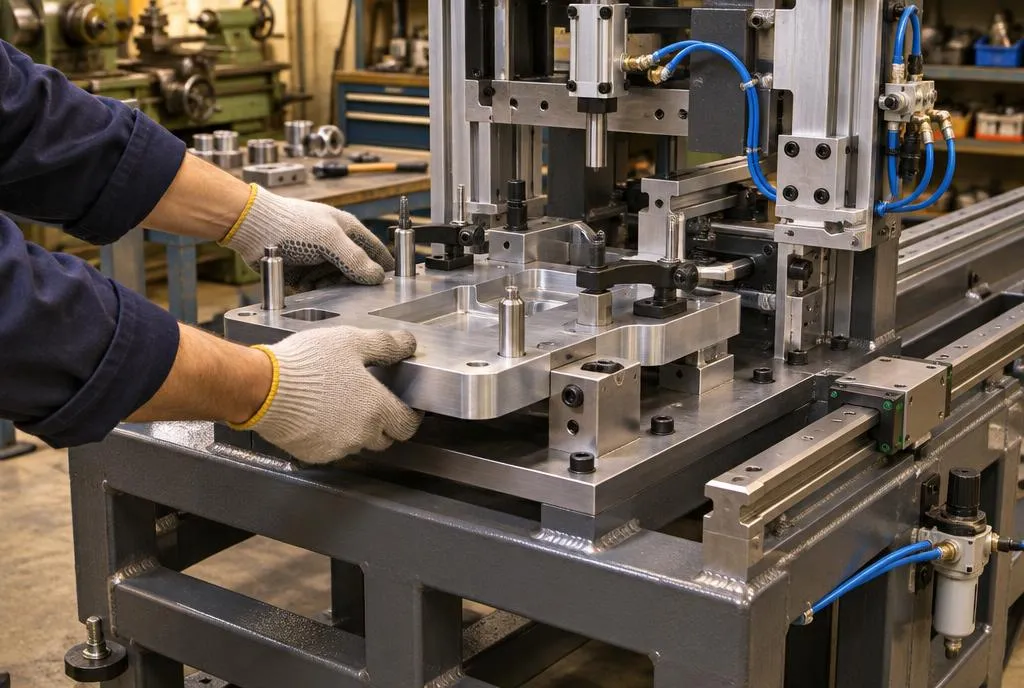
- Detail design and manufacturing: The frame is fabricated by welding, precision parts are CNC machined, and bought-in components are selected.
- Assembly, commissioning and trials: The machine is tested with real parts, and cycle time and quality are measured.
- Documentation and training: Operating and maintenance instructions are prepared and operators are trained.
What jobs are they built for?
Special purpose machines are most often used for repetitive, well-defined operations. Some typical application types:
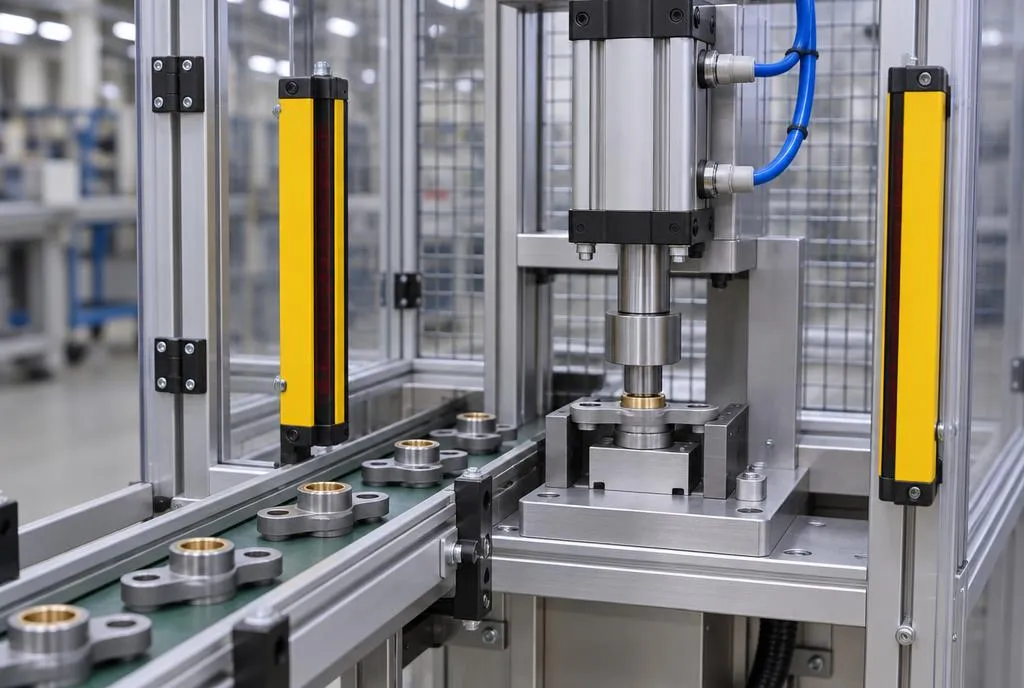
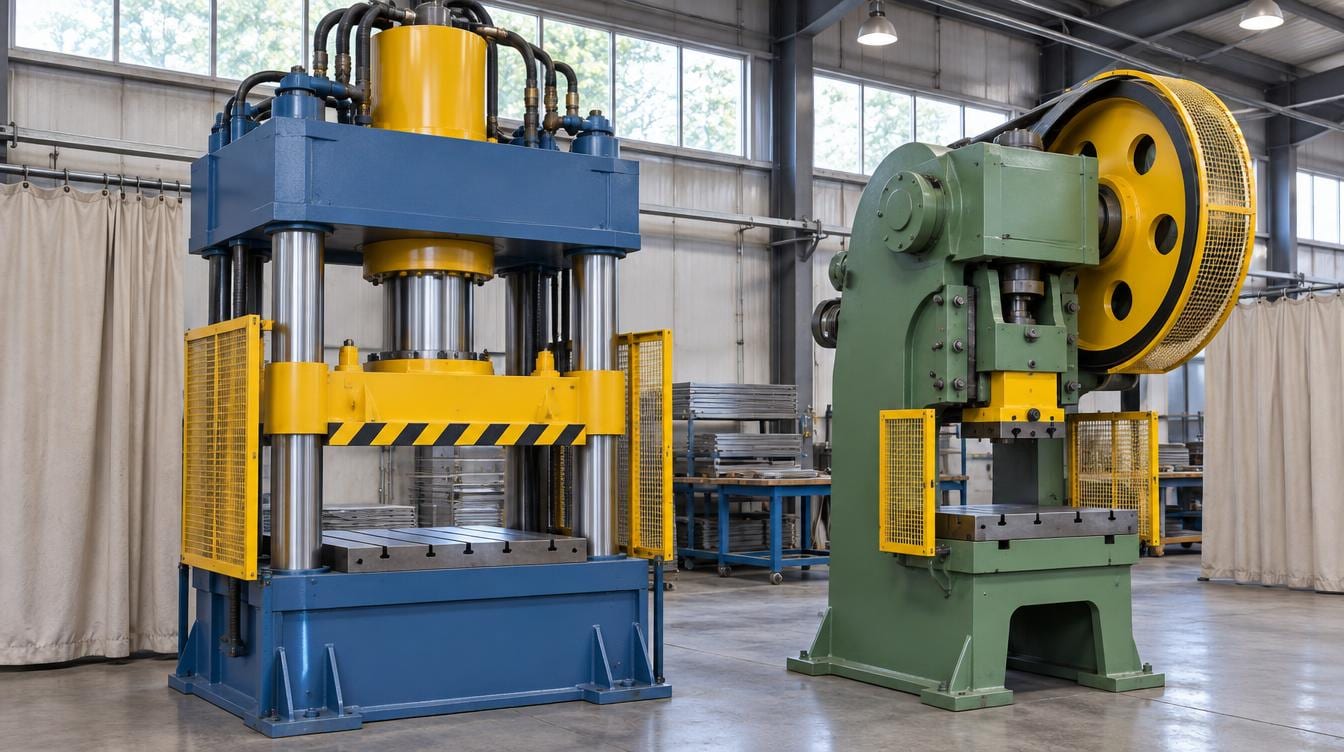
- Pressing and press-fitting: Fitting bushings, bearings and pins; riveting. For press selection, see our hydraulic vs mechanical eccentric press comparison.
- Multi-spindle drilling and tapping: Producing several holes in the same part in one go.
- Welding fixtures and welding automation: Holding the part in the same position every time for a repeatable weld.
- Assembly stations: Performing steps such as screwing, clamping and bonding in sequence.
- Test and inspection rigs: Leak, dimensional or functional checks.
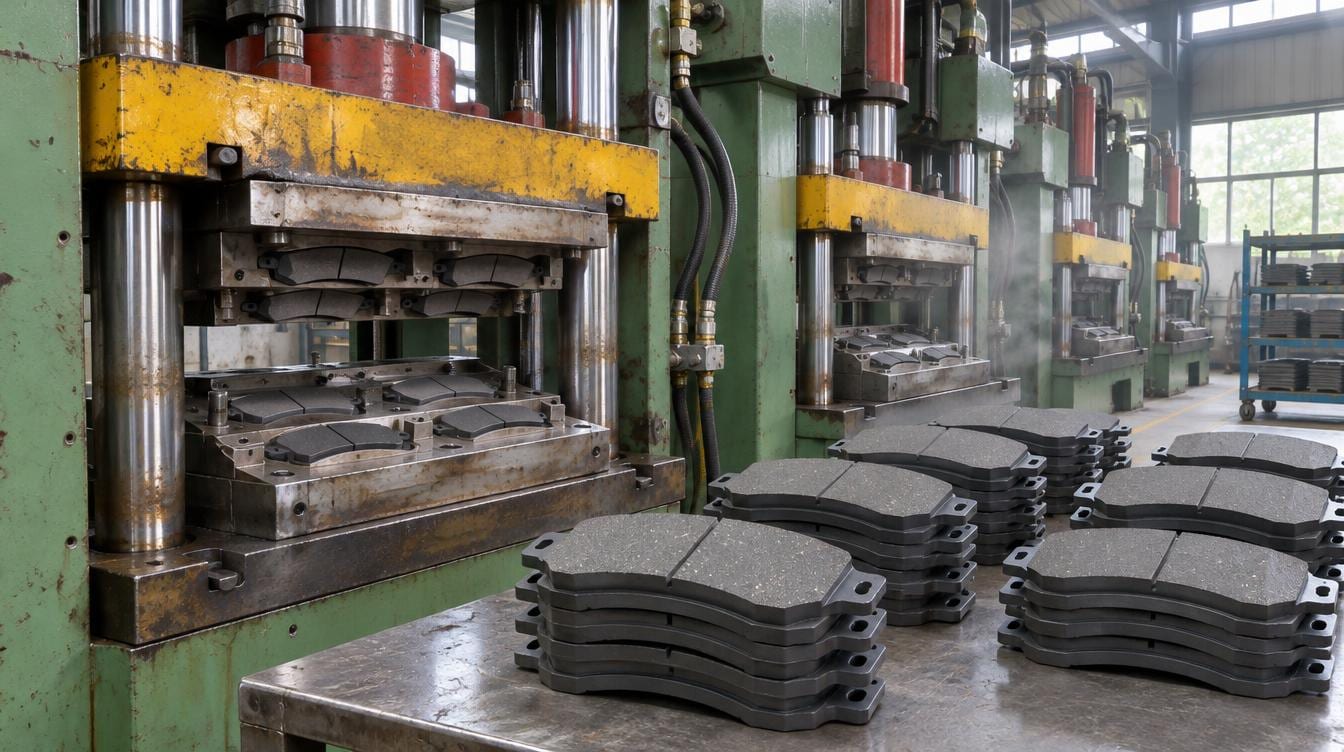
- Industry-specific machines: Such as the presses and preparation machines used in brake lining production.
You can see examples of work from our workshop on our catalogue page.
What about CE marking and machine safety?
A company that builds a machine for its own use is also legally a manufacturer. In Turkey, the definition of manufacturer in the Machinery Safety Regulation that transposes the EU Machinery Directive 2006/42/EC covers a person who builds a machine for their own use. The new EU Machinery Regulation (EU) 2023/1230 also explicitly defines a person who manufactures machinery and puts it into service for their own use as a manufacturer, and it applies from 14 January 2027.
The manufacturer's obligations are to draw up the technical documentation, issue a declaration of conformity and affix the CE marking before the machine is placed on the market or first put into service. In EU practice, the technical file must be kept for at least 10 years.
If you would like to discuss your part and requirements for a project, you can reach us through our contact page.
Sources
Frequently asked questions
What is the main difference between a special purpose machine and a standard machine?
A standard machine is flexible enough to process very different parts. A special purpose machine is designed for one part or operation; flexibility is traded for speed and repeatable quality.
When does it make sense to commission a special purpose machine?
When volumes are high, the product will stay unchanged for several years, model mix is low and the operation is well defined. If the product changes often or volumes are low, a standard machine with a fixture is usually better.
How is payback calculated?
The cost difference per part between the current method and the special machine is multiplied by annual volume. Cycle time, labour, scrap, inspection, safety and maintenance costs should all be considered.
Does a machine built for our own plant need CE marking?
A person who builds a machine for their own use is also a manufacturer under the regulations, with obligations for technical documentation, a declaration of conformity and CE marking. Consult a competent body about your specific case.
What happens to a special purpose machine when the product changes?
It depends on the design. Some machines can be adapted to a new part by changing the workholding and tooling section; in other cases conversion is not economical. This should be discussed at the design stage.
This article is for general information only. Make decisions on machine selection, safety and design together with the relevant engineer and manufacturer.